
Ants
Every Ohio ant is different. We identify the species, find the colony, and stop it at the source.
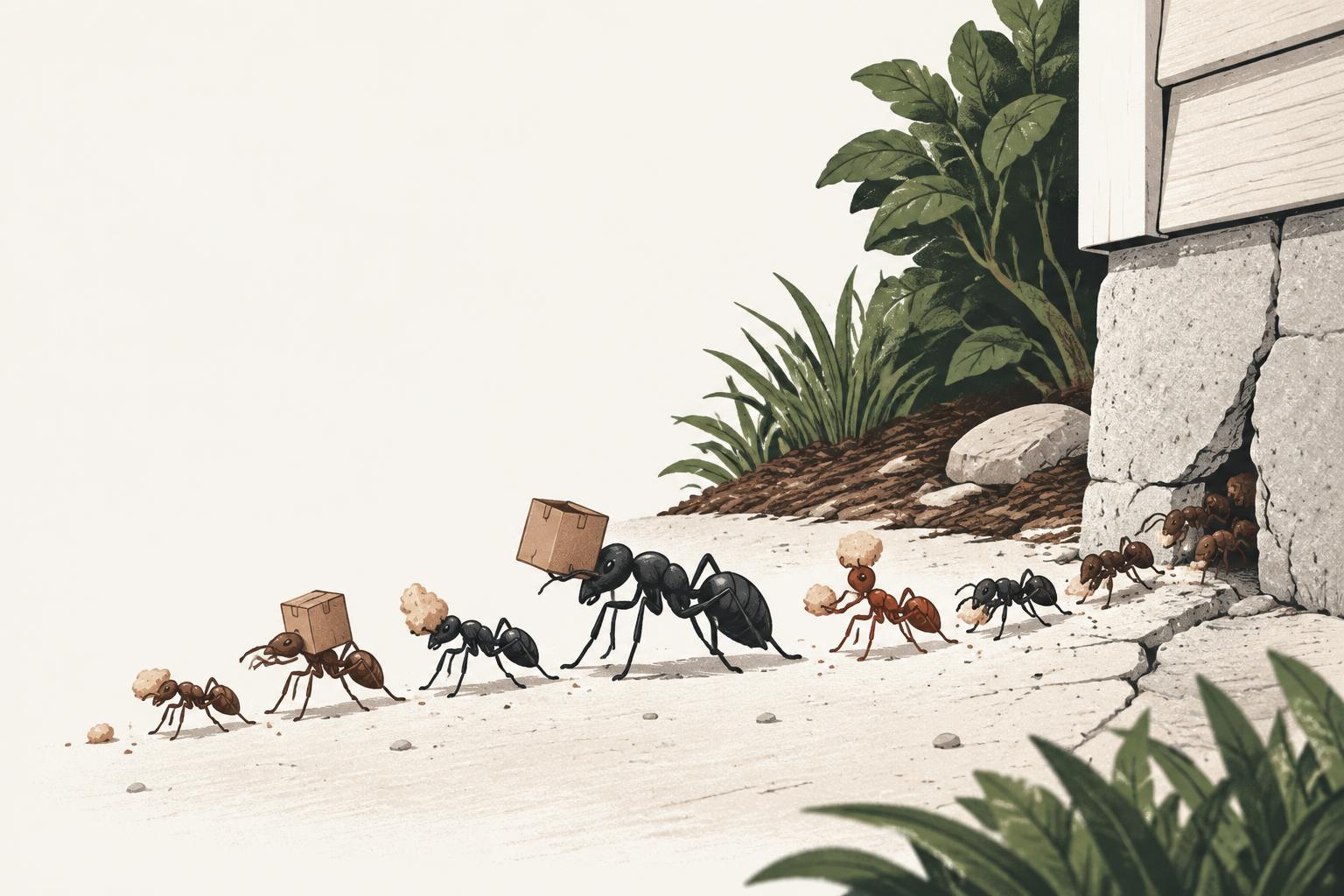
Which ant is it? We treat them all.
The right treatment starts with the right identification. A&J handles nuisance ants, wood-nesting ants, and outdoor colonies across Northeast Ohio.
Small brown ants nesting under sidewalks, driveways, slabs, and foundations
Tiny dark ants that form long indoor trails around sweets and moisture
Large black ants that tunnel through damp or damaged wood to build nests
Small reddish-brown or dark ants that often nest in damp wood and wall voids
Yellow ants with a lemon-like odor, often noticed during seasonal swarms
Outdoor mound builders found in lawns, gardens, and along wooded edges
Common lawn and foundation ants that may tend aphids for honeydew
Very small indoor ants that need careful baiting — spraying can split the colony
Tiny yellow-to-brown ants that nest near other ants and seek greasy foods indoors
Signs you may have ants
- Ant trails along countertops, baseboards, foundations, patios, or sidewalks
- Small piles of sand or soil appearing between concrete cracks and pavers
- Large black ants indoors, especially after dark or near damp wood
- Tiny ants gathering around sweets, grease, pet food, sinks, or houseplants
- Winged ants emerging indoors in spring or summer — often a sign of a nearby mature colony
- Fine sawdust or wood shavings below trim, window frames, decks, or other damp wood
Our treatment, start to finish
- 1Identify the ant species first — pavement ants, carpenter ants, and household ants need different plans
- 2Trace active trails to entry points, nesting areas, moisture, and food sources
- 3Place targeted baits or precise low-toxicity treatments that workers carry back to the colony
- 4Treat exterior cracks, foundation edges, and nesting zones to stop new trails from moving inside
- 5Return for follow-up when needed and adjust the plan if activity continues
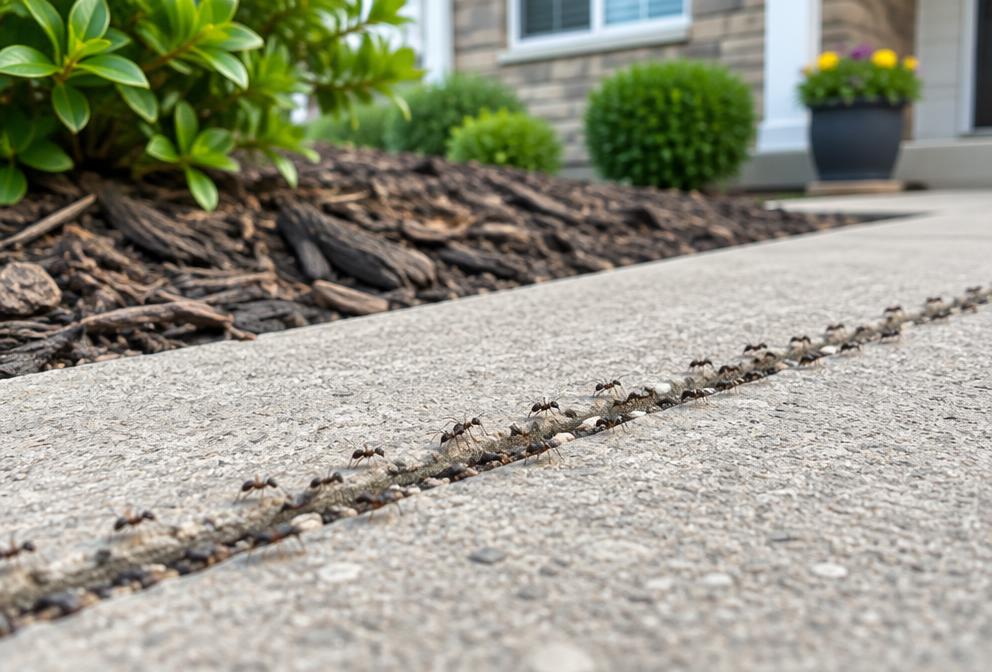
How to keep them from coming back
- Seal cracks around foundations, windows, doors, utility lines, and concrete joints
- Wipe up crumbs and spills, and store pantry goods and pet food in sealed containers
- Fix leaks and damp wood around sinks, basements, crawl spaces, decks, and window frames
- Trim branches and shrubs away from the house, and keep mulch from piling against siding
- Rinse recycling and keep outdoor trash cans closed and away from entry doors
Frequently asked
Is the treatment safe around my kids and pets?+
Yes. We use EPA-registered, low-toxicity products applied where kids and pets don't have direct contact. Areas are safe to re-enter shortly after treatment.
Why do the ants keep coming back after I spray them?+
Most store-bought sprays kill only the ants you can see. The queen and the rest of the colony remain hidden. We choose treatments that reach the colony instead of just breaking up one trail.
How long until the ants are gone?+
You will usually see a big drop within a few days. Complete colony control often takes one to two weeks, depending on the species and nest location.
Are carpenter ants included?+
Yes. We identify and treat carpenter ants, including hidden and satellite nests. Because they tunnel through damp wood, we will also point out moisture or wood conditions that can help them return.
Are flying ants termites?+
Not always. Winged ants have bent antennae and a pinched waist, while termites have straight antennae and a broad waist. We can identify what you are seeing and recommend the right next step.
Do you guarantee your work?+
Yes — if ants return between visits, so do we, at no extra charge.
Ready for ants-free peace of mind?
Get your free quote today. No pressure, no obligation — just fast, family-owned service.