
Bees & Wasps
Fast, safe removal of nests, hornets, and stinging insects — usually the same week you call.
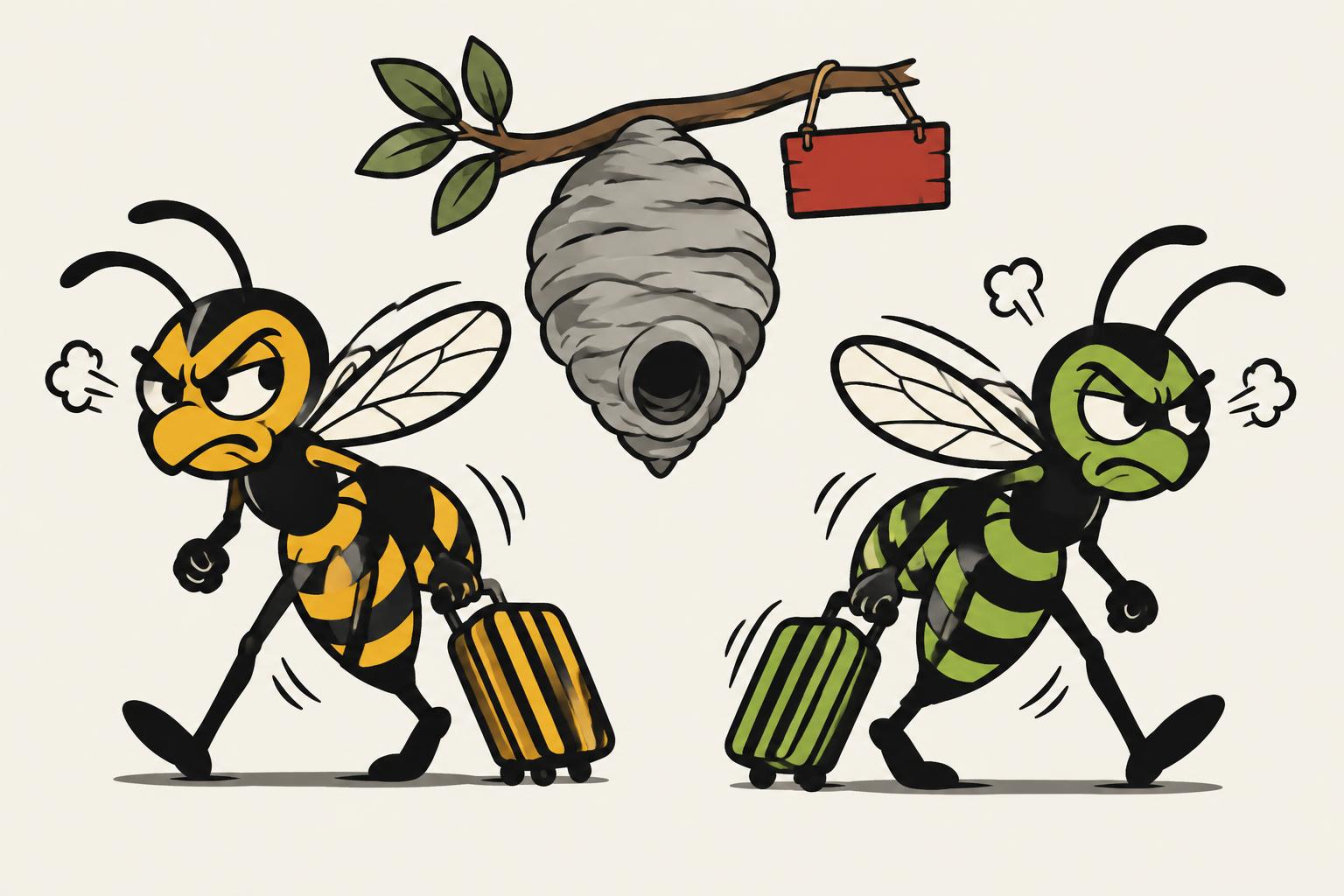
Every stinging insect, one phone call
If it flies, stings, and built a nest on your property — we've got it covered.
Umbrella-shaped nests under eaves, railings, and deck furniture
Ground and wall nests — the aggressive late-summer ones
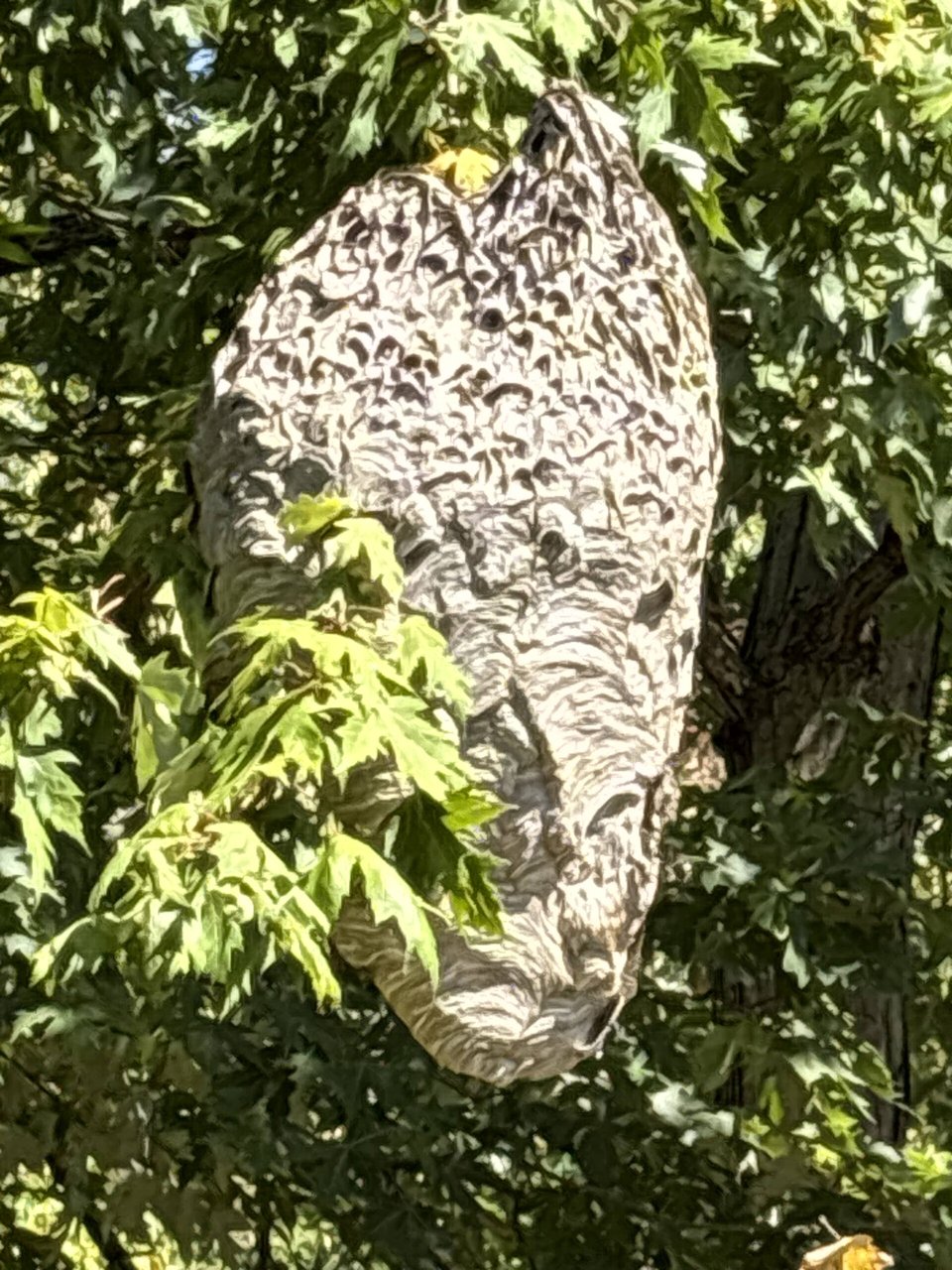
Large gray, football-sized nests in trees and shrubs
Mud tube nests on porches, garages, and attics
Big digger wasps burrowing in sunny lawn areas
Relocated alive whenever possible — we don't treat them like pests
When we relocate vs. when we remove
Your family's safety comes first. But bees matter, so we save them whenever we can.
- Honeybee colonies — important pollinators, always our first choice to save
- Nests we can reach and move out in one piece
- Calm bee species that pose little threat
- Established colonies with a healthy queen
- Wasps, hornets, and yellow jackets that sting to defend
- Nests inside walls or spots where moving them isn't safe
- Nests near doors, decks, play areas, or other busy spots
- Repeat problems that keep coming back each season
Signs you may have bees & wasps
- A papery gray or tan nest under eaves, on decks, or tucked in shrubs
- Wasps flying in and out of one spot — a hole in the ground, a wall, or a soffit
- Yellow jackets swarming food, trash cans, or drinks on the patio
- Heavy traffic around a shed, playset, or deck railing
- Nests that came back bigger than last year — they rarely stay small
Our treatment, start to finish
- 1We inspect and identify the species — treatment differs for each one
- 2Evening or early-morning application, when the whole colony is inside the nest
- 3Full nest removal when it's reachable, so nothing rebuilds in the same spot
- 4Preventive treatment of eaves, soffits, and entry points to stop new nests
How to keep them from coming back
- Seal gaps in soffits, siding, and around vents in early spring
- Keep trash cans lidded and rinse recycling — sweet residue pulls in yellow jackets
- Walk your eaves, deck underside, and playset each spring for new nests
- Call early — a nest the size of a golf ball is a quick job, a basketball is not
- Book a spring preventive spray if your property gets nests every year
Frequently asked
Do you handle honeybees?+
Yes — honeybees are pollinators, so we relocate them alive whenever possible instead of treating. If a hive is inside a wall, we'll walk you through the options.
How fast can you get here?+
Stinging-insect calls jump the line. Most are handled the same week, often within a day or two.
Is the treatment safe for kids and pets?+
Yes. Once the application dries, your yard is safe again — usually 30 to 60 minutes.
Will they just come back?+
A removed nest never gets reused, but wasps return to spots that worked before. Our preventive treatment breaks that cycle.
Is it dangerous to remove a nest myself?+
It can be. Many species get aggressive when their nest is disturbed. Our techs have the protective gear and training to do it safely.
How do you relocate a bee colony?+
We carefully find the queen, gently move the comb and worker bees into a new hive box, and take the colony to a local beekeeper or safe spot where it can thrive.
Ready for a sting-free yard?
Get your free quote today. No pressure, no obligation — just fast, family-owned service.