
Termite Inspections
Termites aren't as common in Northeast Ohio as people fear — but if something's worrying you, a careful inspection gives you a straight answer. We inspect, we report, and if treatment is ever needed, we point you to a specialist we trust.

Termites are rare here — and we only do the inspecting.
Most homes we inspect are clear.
Termites are far less common in Northeast Ohio than in the South, and a big share of what we find turns out to be ants, moisture damage, or old, inactive damage that needs nothing at all. If treatment is ever truly needed, we refer you to a licensed specialist we trust — so the inspection stays honest and the answer stays straight.
We inspect. Treatment we refer out.
Keeping inspections and treatments separate means no upselling — just findings you can act on.
- A thorough, honest inspection of every accessible part of the structure
- Clear written findings — active activity, old damage, or all clear
- Identification of look-alikes: ants, powderpost beetles, moisture damage
- A trusted referral if treatment is ever actually needed
- Termite treatments — we leave those to licensed specialists
- High-pressure sales or inflated scare tactics
- Recommending treatment for old, inactive damage
- Telling you a problem exists when it doesn't
Signs that could point to termites
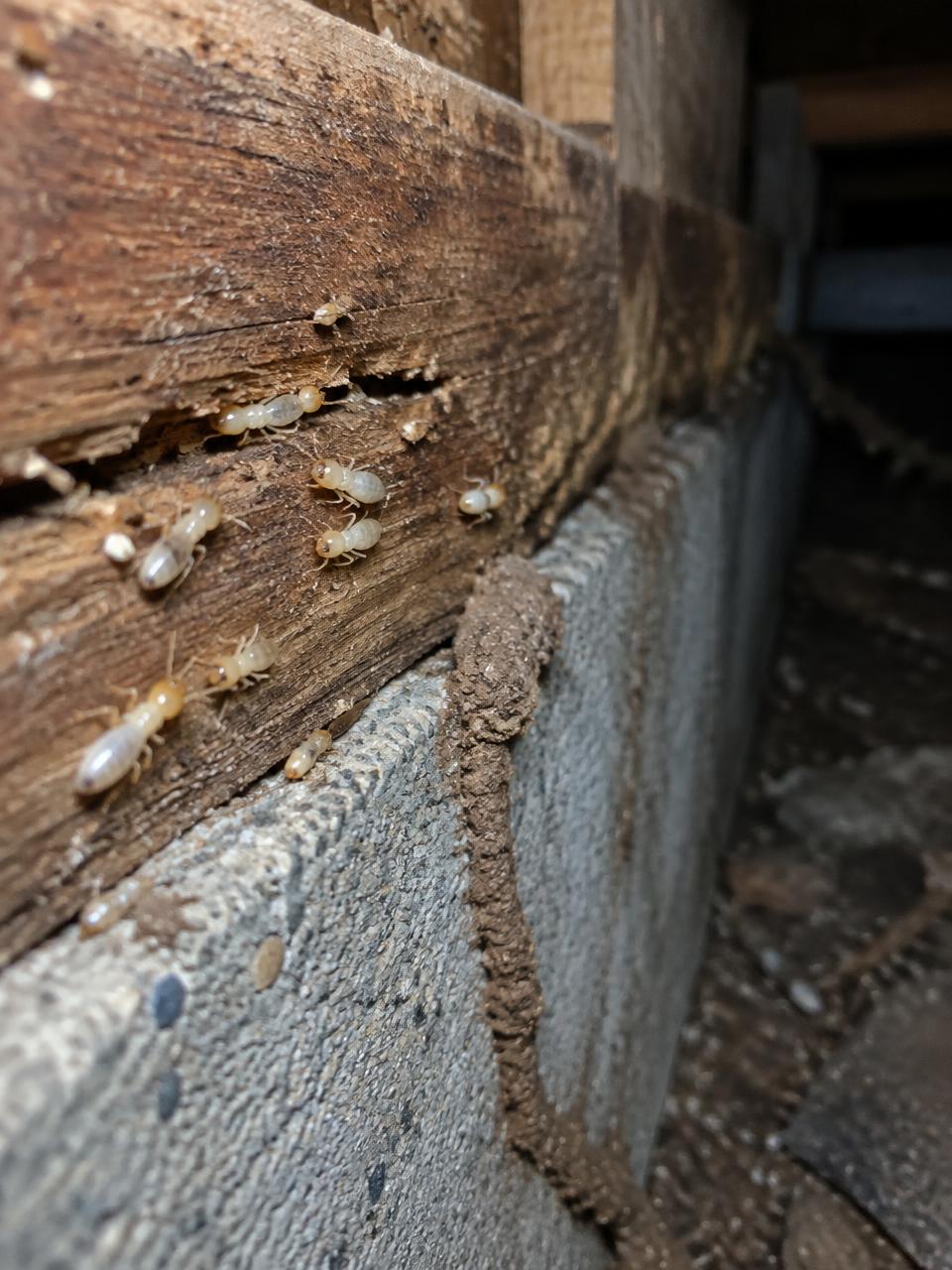
- Mud tubes — pencil-thin brown tunnels climbing foundation walls, sill plates, or crawl-space piers
- Winged swarmers indoors in spring, or piles of discarded wings on windowsills and in spider webs
- Wood that sounds hollow or papery when tapped along baseboards, trim, or the sill plate
- Paint that bubbles or blisters on wooden surfaces, or tiny pinholes in drywall
- Soft or sagging spots in floors, especially near moisture in a basement or crawl space
- Wood touching soil around the house — deck posts, fence lines, or mulch piled against the foundation
What we check, start to finish
- 1Walk the exterior — foundation, sill plate, decks, porches, mulch beds, and anywhere wood meets soil
- 2Check the basement and crawl space — exposed wood, moisture spots, mud tubes, and any old damage
- 3Work through the interior — window sills, door frames, and every spot where you've seen something
- 4Confirm what it actually is — ants, powderpost beetles, and water damage can all mimic termites
- 5Deliver written findings and a straight answer — and if treatment is needed, refer you to a termite specialist we trust
How to make your home less inviting
- Keep mulch, firewood, and stacked wood pulled back from the foundation
- Fix moisture problems — leaky spigots, clogged gutters, damp crawl spaces
- Angle downspouts away from the house so the soil near the foundation stays dry
- Avoid direct wood-to-ground contact on deck posts, steps, and fence lines where you can
- Have an inspection every year or two — especially for older homes and wooded lots
Frequently asked
Do you treat termites?+
No — we specialize in inspections, not termite treatments. If we find activity, we'll show you exactly what we found, explain the options, and refer you to a licensed termite treatment company we trust. You get an honest second opinion, not a sales pitch.
How common are termites in Northeast Ohio?+
Much less common than in southern states — most homes we inspect are clear. But they are here, especially in older homes with moisture problems or wood touching the soil. An inspection is inexpensive peace of mind.
I saw winged bugs indoors this spring — are they termites?+
Maybe, maybe not. Winged ants and termite swarmers look very similar: ants have bent antennae and a pinched waist, termites have straight antennae and a broad waist. Snap a photo or save a specimen and we'll tell you which one it is.
How long does an inspection take?+
Most homes take 45 minutes to an hour, depending on size and how much of the structure is accessible. You're welcome to walk along — we'll point out everything as we go.
What happens if you find termites?+
You get documented findings — where, how far it reaches, and whether the activity looks active or old — plus a clear explanation and a referral to a trusted treatment specialist. Many inspections find old damage only, which needs no treatment at all.
Do you do inspections for home sales?+
Yes. We handle buyer, seller, and real-estate pest inspections with written findings that work for lenders and agents — see our Real-Estate Inspections page.
Ready to know for sure?
Get your free quote today. No pressure, no obligation — just fast, family-owned service.